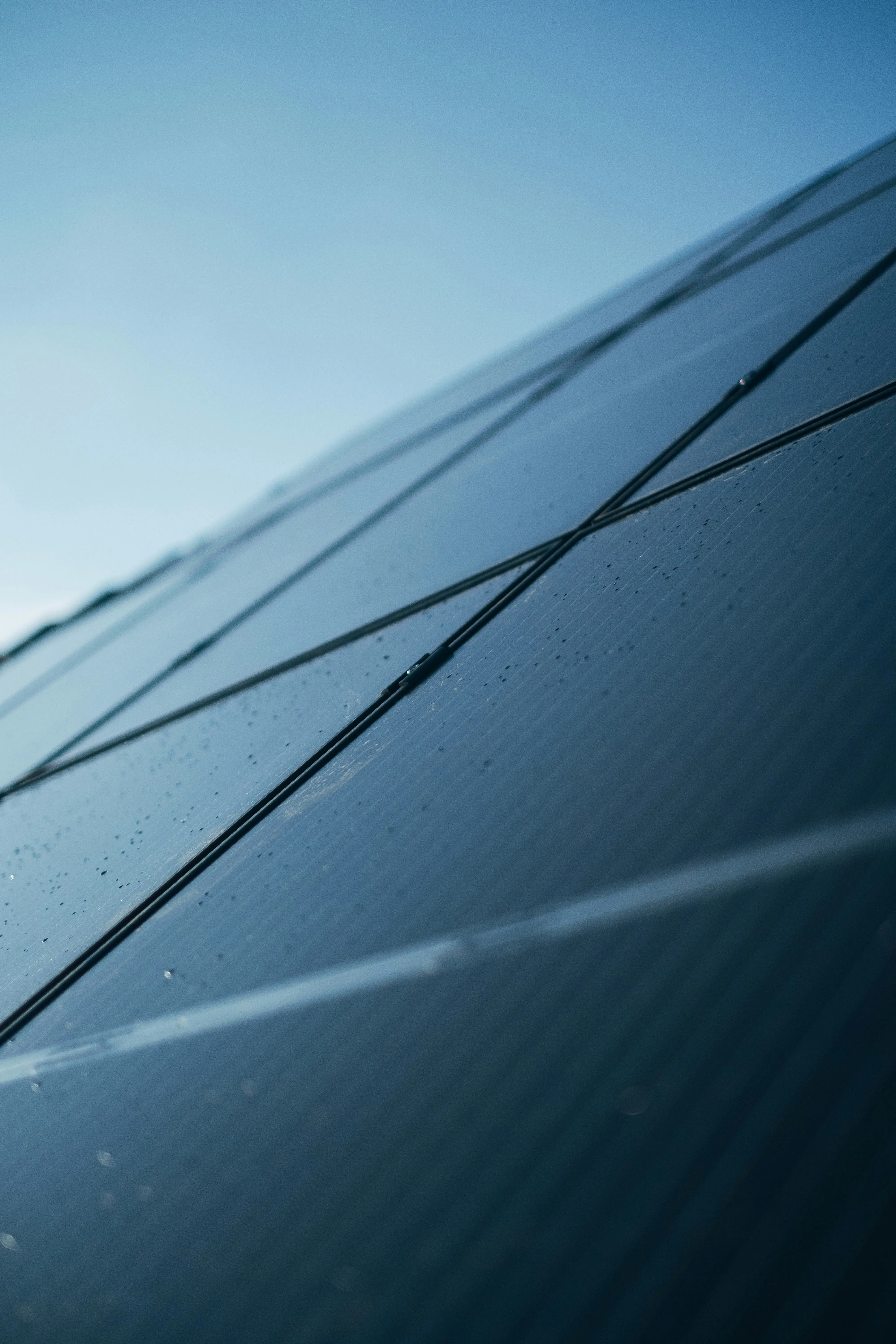
A solar panel, also known as a photovoltaic panel, is a device that typically measures 1.70 m by 1 m on average and converts part of the sun's rays into electrical energy. There are two types of photovoltaic panels. On the one hand, there are mono- and polycrystalline panels, which account for 90% of the current market, and on the other hand, there are thin-film panels.

These panels consist of 60 to 120 photovoltaic cells, manufactured using a semiconductor material: silicon. It is the most abundant chemical element on earth after oxygen and is found in the earth's crust in the form of sand or quartz. Quartz is the second most abundant mineral on earth.
How are monocrystalline or polycrystalline solar panels manufactured?
We start by mixing sand or quartz with wood, and heat this mixture to a very high temperature to obtain silicon. But at this stage, the silicon is not yet ready to be used in the manufacture of a panel. It must still be chemically purified, baked again to form ingots, cut into slices thinner than a hair, doped with boron and phosphorus, and an electrical circuit printed onto the cell. This produces dark blue photovoltaic cells for monocrystalline cells and cells with a mosaic appearance for polycrystalline cells.
This type of panel combines several technologies. We will therefore focus on CIGS technology, which is one of the most widely used. First of all, what does this acronym mean? CIGS stands for Copper Indium Gallium Selenium, which are the main elements that make up this type of panel. What should we take away from this second type of panel? Simply that it was supposed to revolutionize solar energy by reducing production costs. But the manufacturing prices of silicon panels have fallen so much that CIGS technology has lost all its appeal.

In fact, this conversion is made possible by the silicon that makes up the cells. Like all matter around us, silicon is made up of atoms, and what makes silicon unique is that the electrons orbiting these atoms move around in all directions when exposed to sunlight, generating electrical voltage.
But this is not enough to generate electricity. The electrons must be forced to flow in a specific direction. We therefore create a surplus of electrons on the upper layer of the cell by doping it with phosphorus atoms, which have more electrons than silicon. On the lower layer of the cell, we place boron atoms, which have a deficit of electrons.
Thanks to this, when light hits the solar panels, electrons flow from the upper layer to the lower layer of the cell, creating an electric current.
In practical terms, most monocrystalline panels have an efficiency rating of between 18 and 24%. Of course, the more your panels are exposed to sunlight, the more electricity they will produce. Therefore, on cloudy or snowy days, your panels will continue to produce electricity, but in smaller quantities than on a sunny summer day .
However, solar panels do not generate any electricity at night. If you wish, you can install lithium batteries that will store the electricity generated during the day and supply it to you at night.
Now, let's take a look at all the components you need for your solar installation. As we've just seen, solar panels generate electricity when exposed to light. But to be precise, they produce direct current, whereas your home and the electrical grid use alternating current.
All you need to do is add a photovoltaic inverter that converts direct current into alternating current. The solar panels are connected to one or more inverters and then to your electricity meter. For a solar panel to produce the most electricity, it must be positioned optimally to receive as much light as possible. Before sizing a photovoltaic installation, various factors must be taken into account. The available surface area must be considered in order to determine the maximum power of the future installation. Orientation and inclination must also be considered in order to maximize electricity production throughout the year.
The roof is the most common location for private and professional installations.
The panels can be integrated into the roof or placed on top of it.
The first option is to replace part of the roof covering with panels.
The principle of the second option is to install the panels above the roof using a support structure. Solar panels can also be placed on the facade.
This technique is less common because its production yield is lower than that of roof installations (30% less production for the same amount of sunlight). In addition, panels placed on facades are likely to be more affected by external elements (trees, neighbors) and their shade.
Buildings that cannot have panels installed on the roof can have them installed on the ground. This system is very easy to set up and can be optimally oriented. However, a large area of land is required.